

In short
- Non-invasive neurotech (Aleph Neuro's ultrasound) reads brain activity through the skull, no implant needed.
- IBM's 7-angstrom stacked-transistor nanostack buys roughly another decade of density scaling.
- Perceptive foundation models let humanoids adapt to real terrain instead of memorizing flat floors.
- AI capability races toward days of autonomous work while human usage stays sequential — one agent at a time.
- AI's real ceilings are power and silicon, not water — the Netherlands' grid limits ASML's growth.
Every week I read more AI news than any one person should, and most of it is noise. The signal shows up when you line the week's stories next to each other and notice they are pointing the same way.
This week they were. A neural network learned to see through skulls. A transistor got shrunk to the width of a DNA strand. A humanoid stopped assuming the floor was flat. And the country that builds the machines that build the world's chips ran short on electricity. Four different fields, one shape underneath: the digital story keeps colliding with the physical world, and the physical world keeps having the last word.
Five stories on that collision, and then seven things I could not fit.
The brain, read from outside the head
Aleph Neuro says it is reading neural activity with sound waves. No implant, no surgery.
The physics is elegant. Focused ultrasound passes through the skull. Blood flow shifts as neurons fire, those shifts change how the waves scatter back, and you read the echo to map the activity. What used to mean drilling into the skull and threading electrodes now happens from outside the head.
Most neurotech attention goes to implants, chips in the cortex, headlines about typing with thoughts. Meanwhile the non-invasive side has been quietly closing the gap without the risk of open-brain surgery. The same week, the AI image lab MidJourney announced a full-body scanner that its founder describes as "as powerful as MRI, as casual as a trip to the spa." That reads like a joke until you notice a preventive-imaging company already runs more than $500M in revenue on radiation-free scans with no VC funding at all.
The gap that remains is resolution, and I would not skate past it. Blood flow is a slow, blurry proxy for what neurons are actually doing, which is why implants exist in the first place: an electrode hears individual cells and an ultrasound echo hears a neighbourhood. Non-invasive reading closing the gap does not mean the gap has closed, and the applications that need single-neuron precision are unlikely to move.
Still, the thing worth sitting with is that the model which learned to read patterns in pixels appears to be the same kind of model that can read what is happening inside a body. The perception layer is leaving the screen and pointing at us.
this was the week AI stopped being weightless.
The machines keep shrinking; the map keeps growing
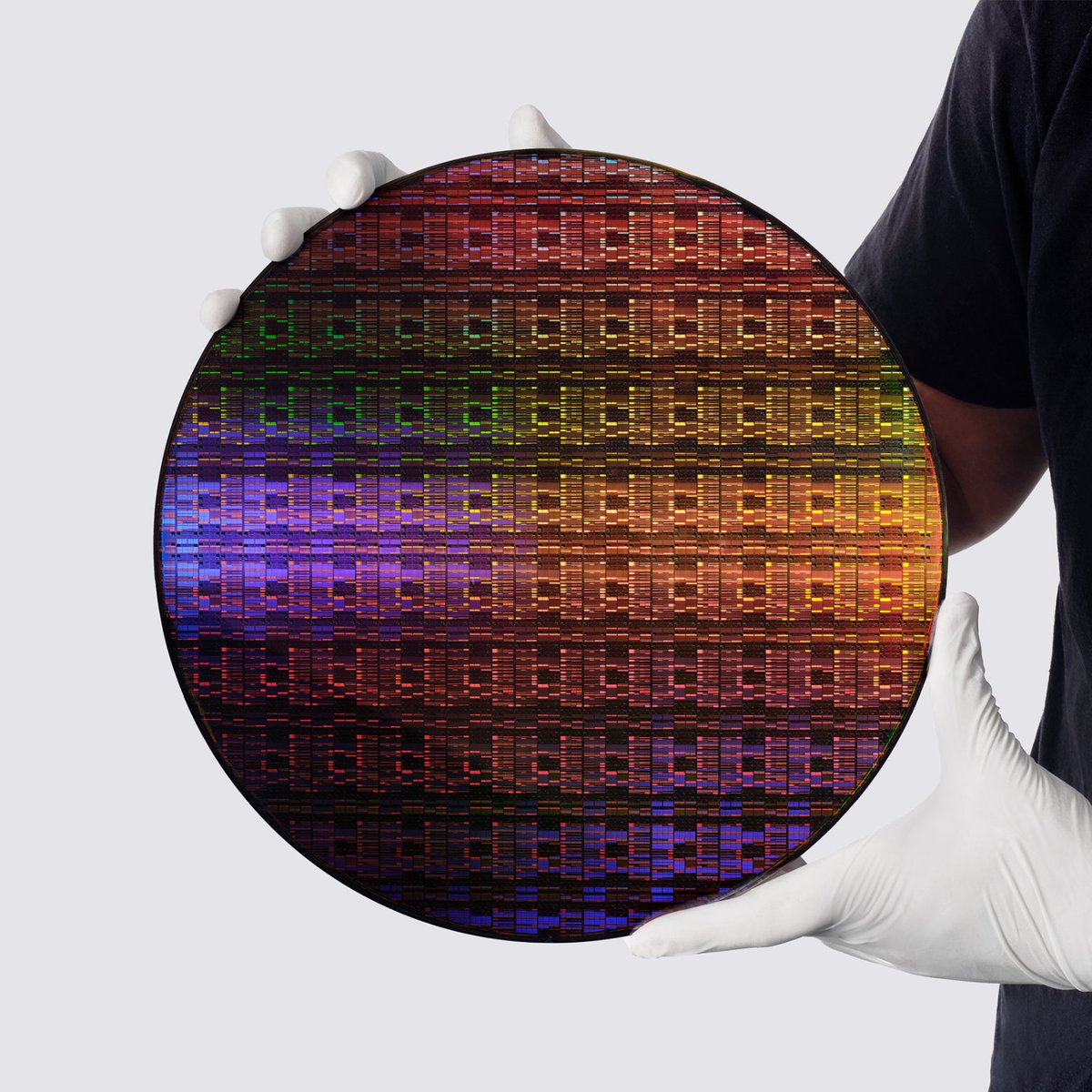
IBM reports building a transistor 7 angstroms wide, about the width of a single strand of DNA.
Sit with the number: 0.7 nanometers. Sub-1nm was roughly where a lot of people had quietly assumed Moore's Law would finally run out of room, because you cannot keep shrinking flat transistors forever before the physics stops cooperating. So IBM stopped shrinking flat and started stacking. Their nanostack architecture piles transistors vertically — the same trick that turned single-storey cities into skyscrapers once the land ran out. I read it as buying roughly another decade of density scaling.
I care about this more than a spec bump because everything upstream of it, longer agent runs and cheaper tokens and bigger models, sits on this floor continuing to move. A lab demonstration is not a production node, though, and the distance between them is usually measured in years and in yield. IBM has a long history of showing the industry what is physically possible some way ahead of anyone being able to manufacture it at volume, which is valuable and is not the same as a shipping date.
Which is why the export-control story got sharper the same week. The US told ASML it is worried China may have got hold of a leading-edge tool, and that is the exact leak the whole regime was built to prevent. The theory is simple enough. You can design a chip anywhere, but you cannot fabricate a bleeding-edge one without a handful of machines only a few companies know how to build, so if you control the tools you control the frontier. The entire strategy rests on one assumption, which is that the chokepoint holds.
The robots stopped trusting a remembered world
For years humanoid robots assumed the floor was flat. Most lab demos ran on the same polished surface every time, so the robot never really saw the ground. It memorised it.
That assumption is breaking. Perceptive Behavior Foundation Models let a humanoid take one learned human motion prior and adapt it to whatever terrain it actually sees. A slope, a stair, gravel. Decided on the fly rather than scripted in advance. PNDbotics says its Adam is the first full-size humanoid to scale a 1-metre box. That is not stepping over a curb; it is climbing something taller than a kitchen counter. And NVIDIA's Isaac GR00T is trying to unify a fragmented developer stack, putting simulation and data and training in one place so setup takes hours rather than days.
The pattern underneath all three is that perception is catching up to motion. The robot stops trusting a remembered world and starts responding to the real one, which is the same move Aleph Neuro made with the brain and MidJourney made with the body. Machines are learning to read the physical world as it is rather than as a model assumed it would be.
What none of the three demos shows is failure. A terrain-adaptive humanoid is interesting for how often it falls, not for the run where it did not, and that number is almost never published. I would treat every one of these clips as an upper bound on capability rather than a description of it, which is not cynicism so much as the standard you would apply to any vendor video.
Capability is racing; the way we use it is standing still
Claude Opus 4.7 built what Ethan Mollick estimates was 2 to 17 weeks of engineering work, in 14 hours. I keep coming back to it because it is a full software package, the kind of thing a human team would normally scope and plan and grind through over weeks.
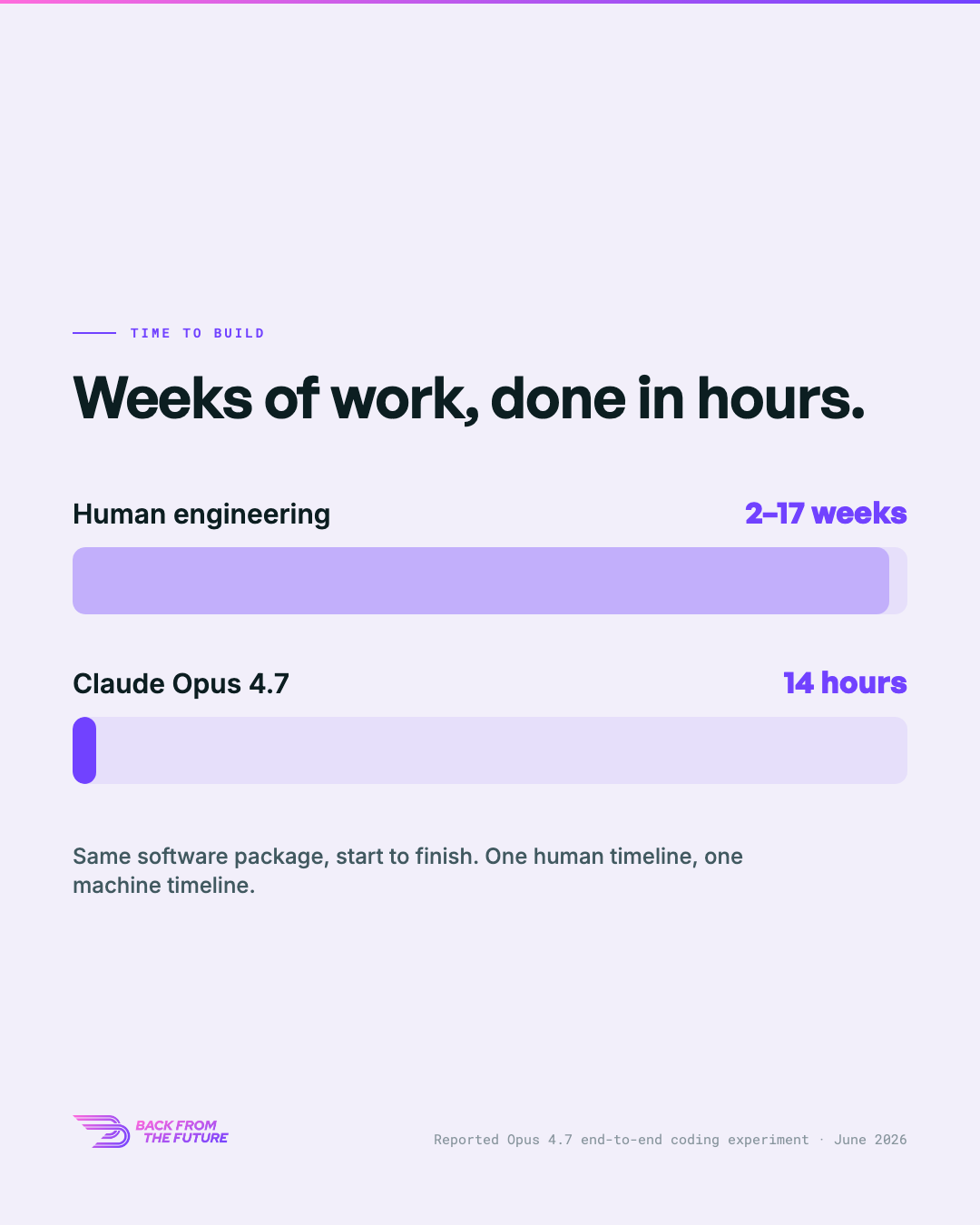
The new MirrorCode benchmark measures exactly this: the largest engineering tasks a model can finish coding autonomously for days at a time. METR-style time-horizon extrapolations now push predicted 50% task-completion into dozens of hours of continuous work, and I have seen one projection land at 61 hours. Treat that last figure as an extrapolation rather than a measurement, because it is one. The two-to-seventeen-week range is also an estimate of what a human team would have taken, made by the person reporting the result, not a controlled comparison.
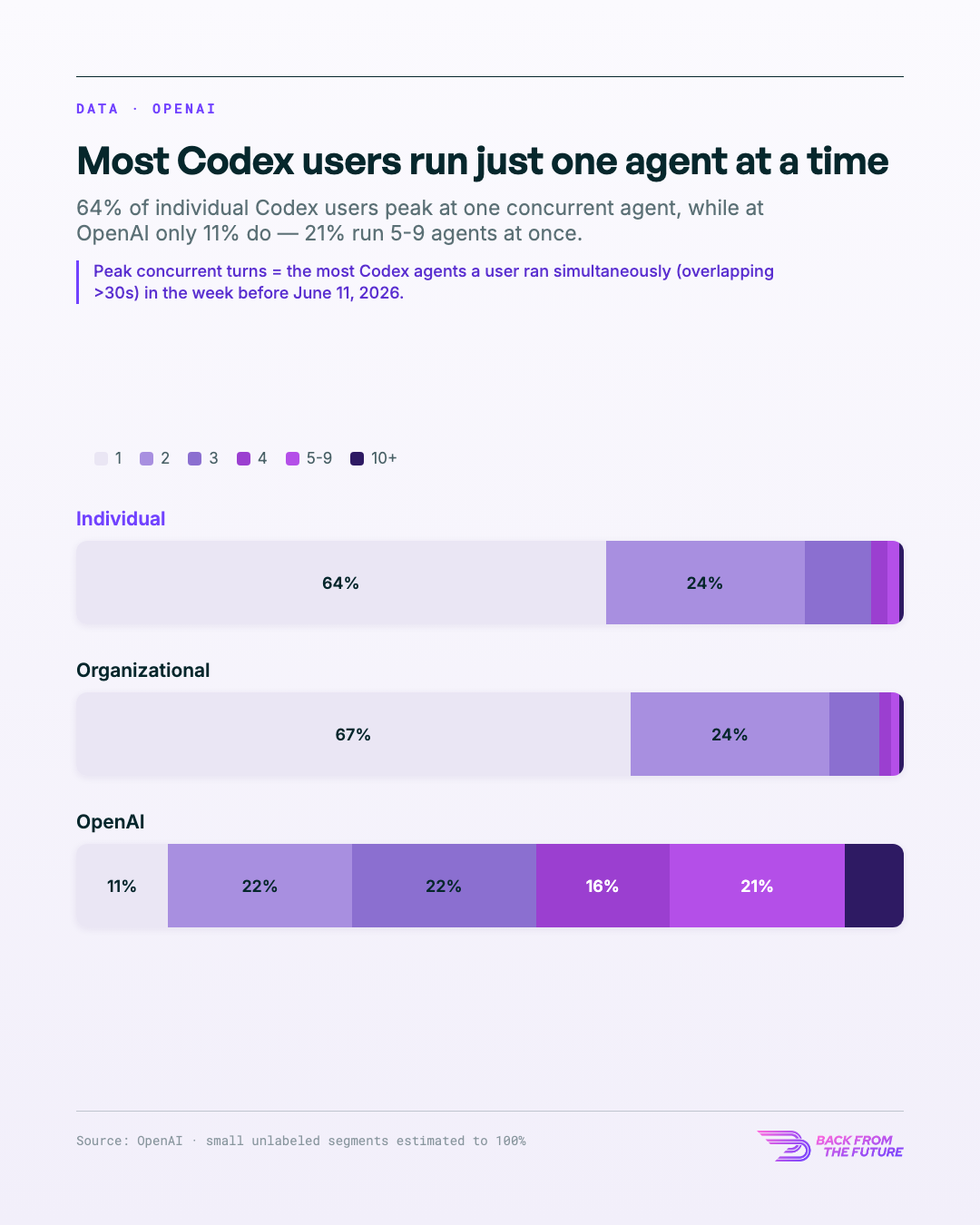
Then you look at how people actually use these tools, and 64% of Codex users run exactly one agent at a time. Among US adults, the survey has half now using AI while only 18% call themselves confident with it. That works out to roughly 37% even among the people who have tried.
Two curves are pulling apart here. Capability is sprinting toward workweeks of autonomous output while human habit stays sequential: ask one question, get one answer, move on. If you are waiting for the productivity story to arrive evenly across your organisation, I would stop waiting. It accrues to the few who change how they work rather than the many who touch the tool and call it done. The uncomfortable corollary is that the gap is a management problem long before it is a technology one, and management problems do not resolve themselves on an exponential.
The digital economy has a physical floor
The Netherlands makes the machines that make the world's chips, and it is running out of electricity to grow.
ASML in Veldhoven builds the lithography systems every advanced fab on earth depends on. I would argue there is more silicon expertise packed into that one small country than anywhere else in Europe. What is holding it back is neither talent nor capital. It is the grid, and companies wanting new or bigger electricity connections sit on waiting lists that run for years.
We keep talking about AI as a software story of models and tokens and agents. But every token runs in a data centre, and every data centre needs a connection to the grid. AI compute has reportedly been doubling every seven months since xAI's Colossus launched. That is triple the pace of Moore's Law.
The popular ceiling was water, and I do not think that one survives contact with the numbers. US data centres use about 0.2% of the country's daily water, which makes it a local siting problem rather than an industry ceiling. The real ceilings are power and silicon, because you cannot double compute every seven months without doubling the electricity to run it. Meanwhile $110 billion in real generative-AI sales was booked over the past year, a run rate north of $175B. That is demand pushing hard against a physical supply that cannot move at software speed.
The obvious rejoinder is that constraints like this have been announced before and the industry routed around them every time, through efficiency, siting, or simply paying more. That is a fair record and I would not bet against it lightly. What is different about a grid connection is that the workaround is not technical: you cannot make a substation appear faster by being clever, and the permitting queue does not care how much you offer.
The theme across all of it, for me, is that this was the week AI stopped being weightless. Sound waves through bone, transistors at DNA scale, robots reading gravel, agents that run for days, and a grid that cannot keep up. The frontier keeps moving and it keeps discovering its floor, and the floor is made of physics, electricity, and machines only a few places on earth know how to build.
I would watch where the bottleneck sits next quarter. My guess, and it is a guess, is that the binding question stops being whether a model can and becomes whether the world underneath it can supply the power and silicon to let it.
Seven things I could not fit
Someone turned an iPhone into a click-wheel iPod. The recipe was a vibe-coded app that strips the phone back to a dumbphone, plus a 3D-printed shell with a real spinning wheel. A few years ago that took a team, a spec and a manufacturing run; now it takes one person, an afternoon with a coding assistant, and a printer on a desk. I like it as the whole loop in miniature: software ate hardware, and then one person rebuilt the hardware anyway.
A 3D print that finishes in 0.6 seconds. Tsinghua's DISH method projects patterned light into a vat of resin and cures the entire shape at once instead of building it slice by slice. Conventional printing scales with height: one thin layer, then the next, for minutes or hours. Removing the vertical axis means the object does not grow. It resolves.
A neural network is rendering Minecraft's light. Someone has a generative world model reinterpreting every frame of a fifteen-year-old game, live — clouds, shadows, the way light spills across a block, none of it drawn by the game's code any more. Absurdly expensive, and I think beside the point. For decades rendering meant a hand-built pipeline: geometry in, maths applied, pixels out. Here the renderer is the model.
GPT-5.6's two footnotes beat its benchmarks. It took the lead on US-govt-bench and undercut Fable and Mythos on price, which a year ago would have been the entire story. The footnotes: the release was staggered at the government's request over security concerns, so the lab no longer ships on its own timeline; and OpenAI's own system card flags concerning forms of misaligned behaviour in agentic coding. Both are in the release, and neither is in the headline.
Human Go got better after AlphaGo, not worse. The assumption after 2016 was that human play would wither, because why study a game a machine had solved. Researchers measured professional moves before and after and report that quality went up, with players finding lines that had sat outside the collective imagination for centuries. The machine did not shrink the space of human creativity; on this evidence it widened it.
The intelligence score is the wrong number for an agent. GLM-5.2 scores 51 on intelligence against GPT-5.5's 55, but on AA-Omniscience — how often a model gives a confident wrong answer where it should say "I don't know" — GLM-5.2 hallucinates 28% of the time, Fable 5 sits at 48% despite leading on intelligence at 60, and DeepSeek V4 Pro reaches 94%. For a chatbot you are reading and correcting, a few points of intelligence win. For an agent buying and booking while you sleep, the ranking inverts.
The top-ranked model this week is Chinese, and so is the one under your app. DeepSeek V4 Flash took the leaderboard with 4.68T tokens, nearly 14% ahead of second place. The FT reports what most people shipping software already know: the world increasingly runs on Chinese open models, because they are cheap, capable, permissively licensed and easy to drop in. Two races have quietly separated, and only one of them has a leaderboard.
This is the connected version of the week. If it is useful, it lands in your feed every Monday.

Ruben Horbach
Co-founder · Back From the Future
Ruben researches how organisations adopt AI meaningfully — not as technology, but as a change in work and people. He builds the agent infrastructure behind BFF and speaks about the near future of work.